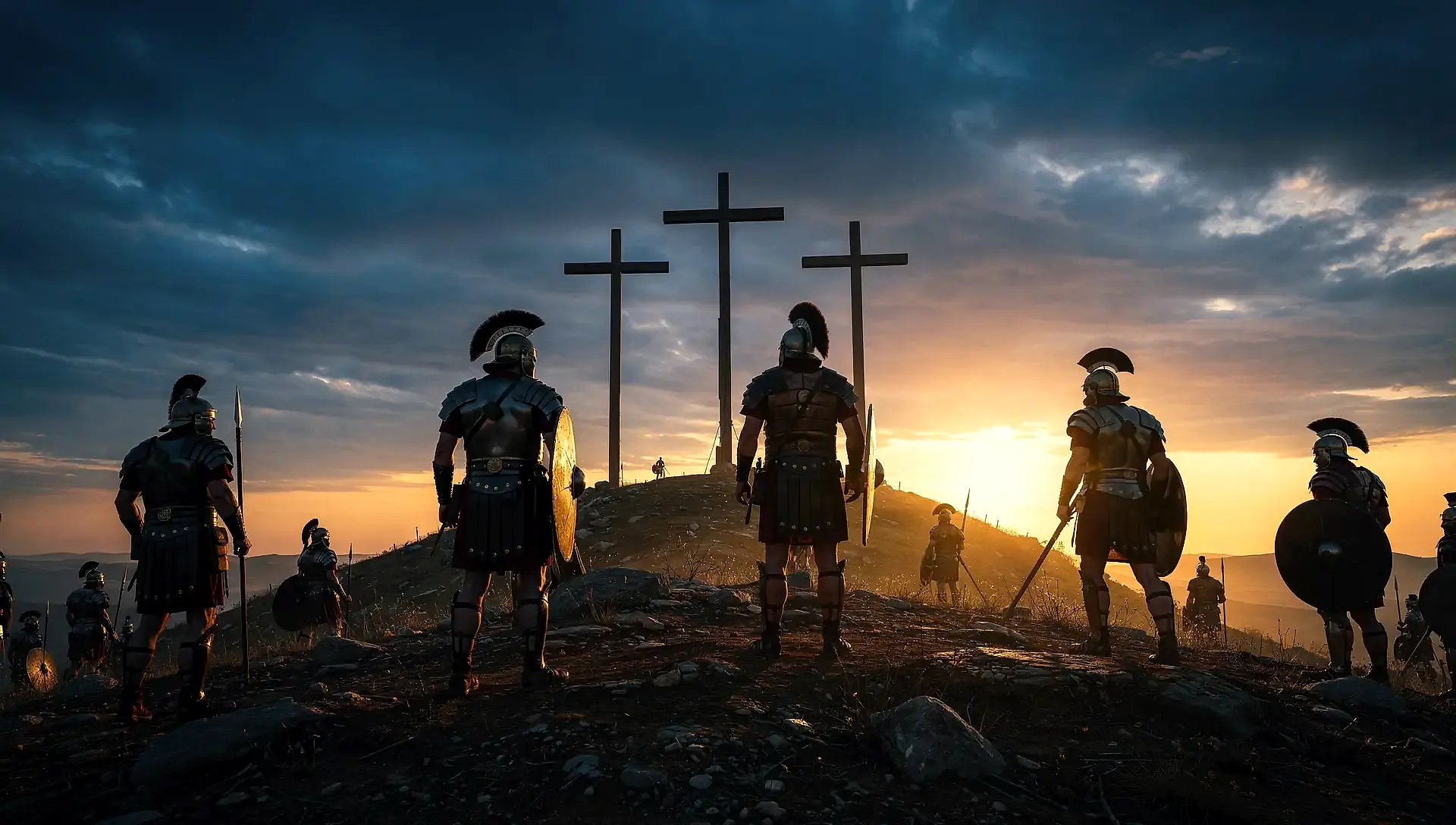
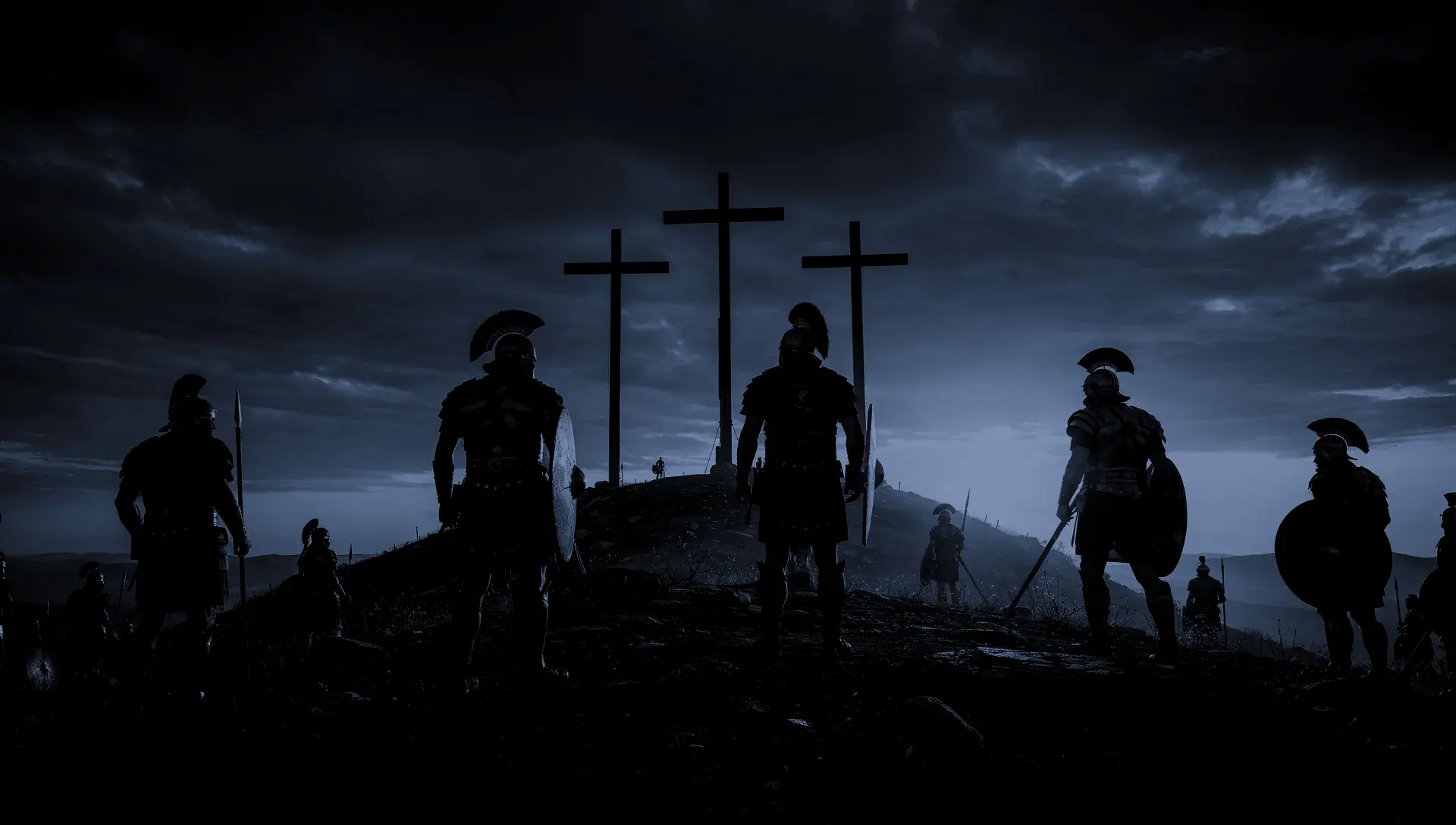
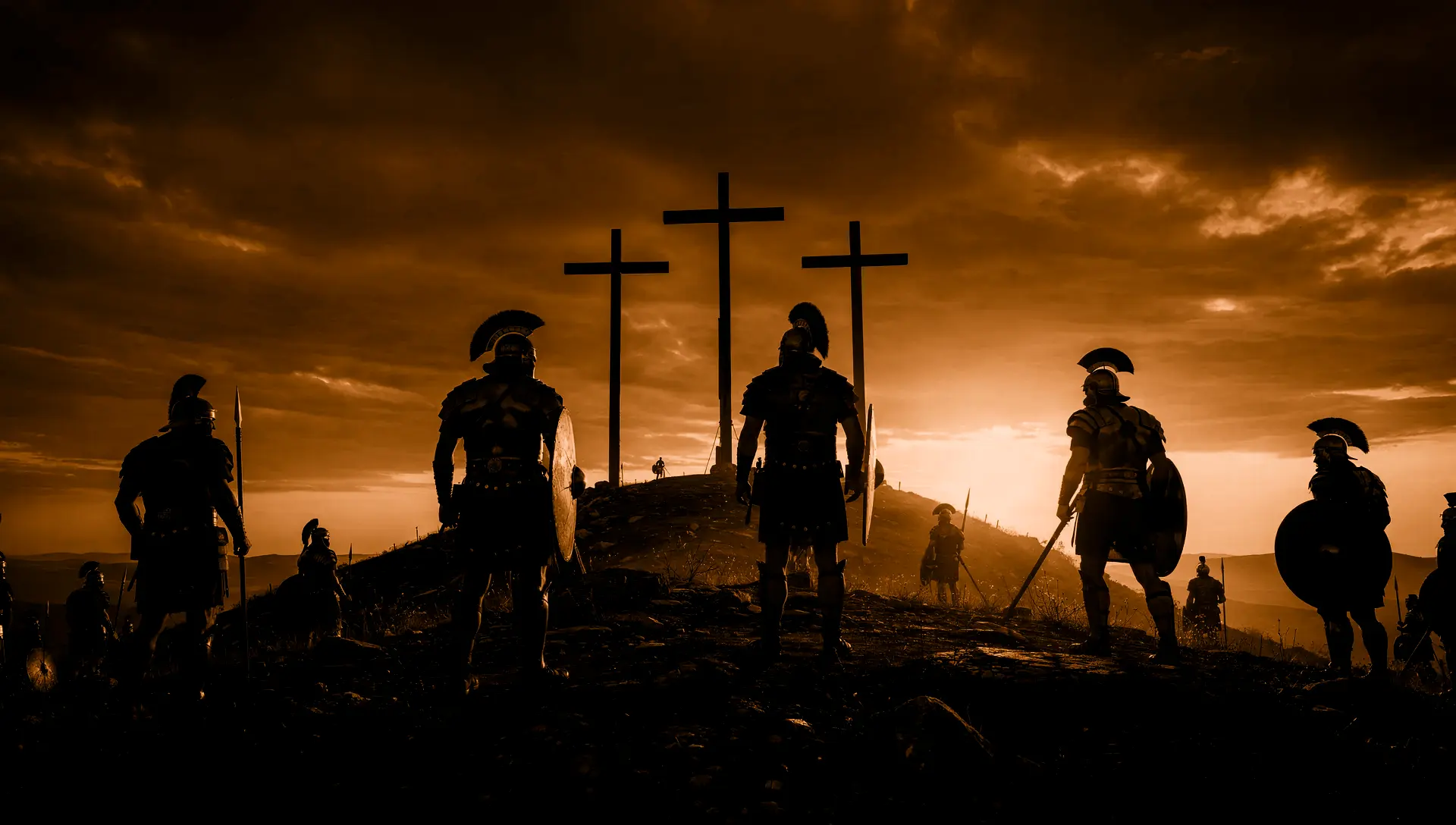
We don’t begin with the arrest. We don’t show the trial. We don’t walk the Via Dolorosa. We begin on Golgotha at dawn.
Four men. Three crosses. A long day ahead.
A feature film · Prestige historical drama
What if you were there… and you missed it?
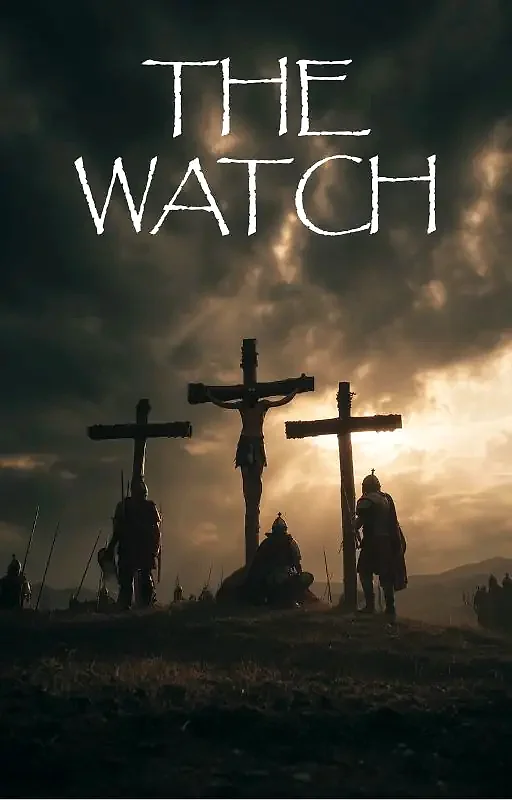
The crucifixion of Jesus Christ, seen through the eyes of the four Roman soldiers who carried it out, and who must choose what to do with what they witnessed.
We don’t begin with the arrest. We don’t show the trial. We don’t walk the Via Dolorosa. We begin on Golgotha at dawn.
Four men. Three crosses. A long day ahead.
“And it was the third hour, and they crucified him.”
Mark 15:25
“When the sixth hour was come, there was darkness over the whole land until the ninth hour.”
Mark 15:33
“One of the soldiers with a spear pierced his side, and forthwith came there out blood and water.”
John 19:34 · Longinus sees for the first time
Four soldiers break bread and share wine beneath three crosses, unknowingly recreating the Last Supper while Christ dies above them.
The image at the heart of the film
“You cannot unsee what you have seen. Now choose.”
Act three · the stone is rolled away
The story
Every film about the crucifixion focuses on Jesus. This one focuses on the men who nailed him to the cross.
Four Roman soldiers are assigned to crucify a Jewish preacher and guard his tomb for three days. To them, it is routine: three criminals, standard procedure, orders from Pilate. They will witness the most significant event in human history. What they do with what they have seen will define them forever.
THE WATCH lives in the hours of waiting: the boredom between hammer strikes, the meal eaten in the shadow of dying men, the jokes told to fill silence, the slow unraveling of everything these soldiers thought they knew about the world.
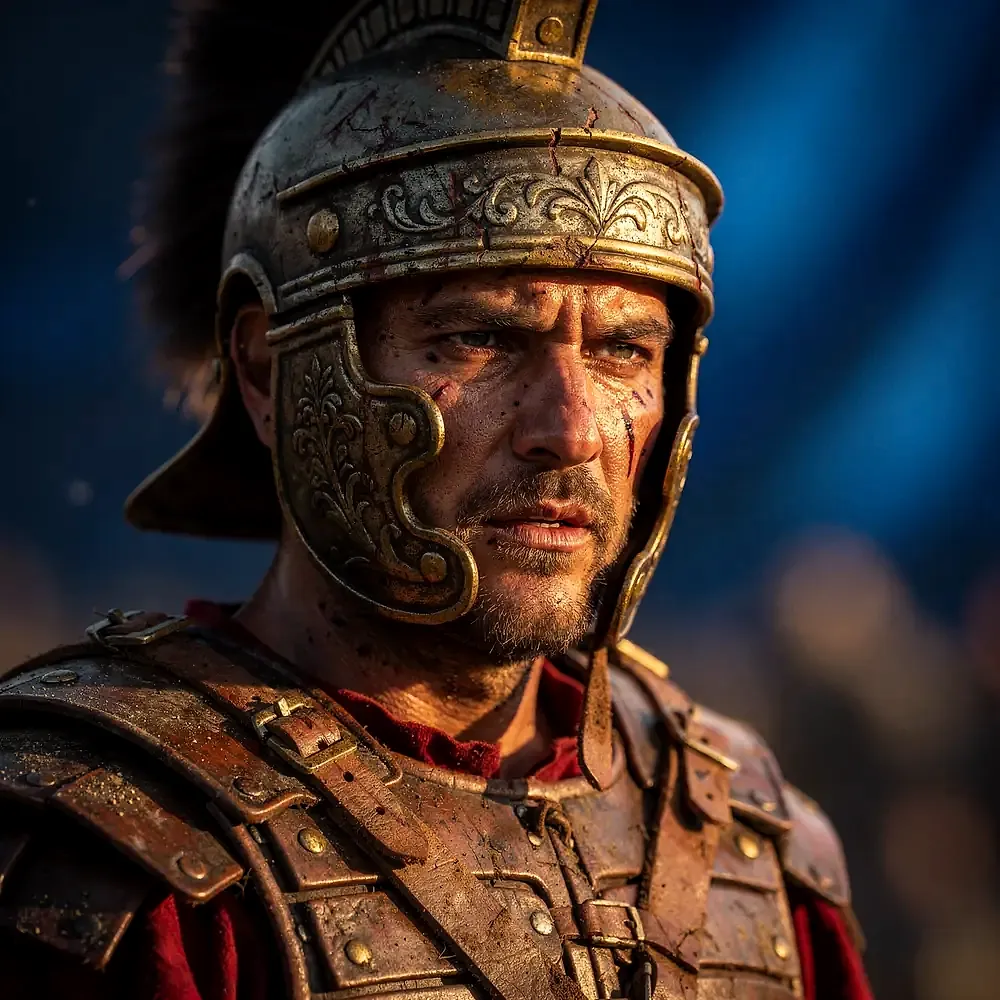 Centurion Longinus · concept
Centurion Longinus
A half-blind veteran who has killed so many he stopped counting. He receives routine orders: execute three criminals at Golgotha. He prepares his men. He does his job.
But when he drives a spear into Jesus’s side, blood and water cascade down, and his clouded eye is healed. In that moment of impossible clarity, he sees.
“Truly… this was the Son of God.”
Now he must choose: serve Rome… or serve the truth.
The men
The Broken Seeker
A centurion going blind, who will see clearly for the first time when blood touches his eyes.
The Innocent
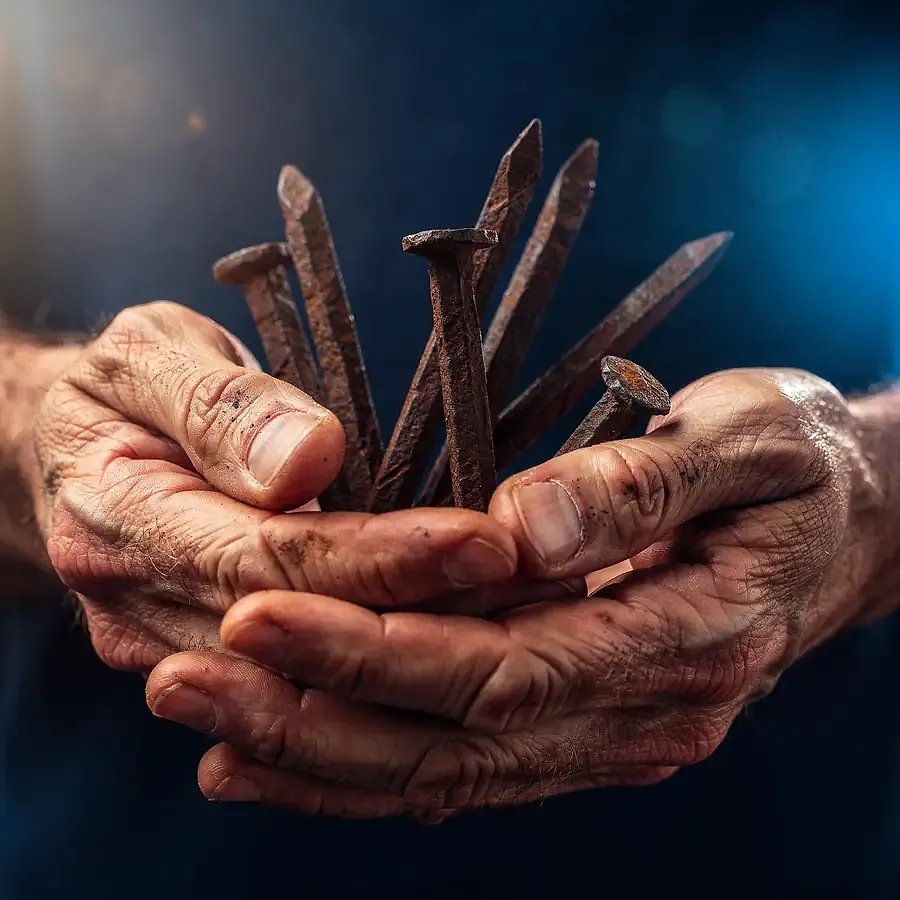
Eighteen, still soft, forced to hold down the arm while the nail goes in. The crucifixion will either destroy his innocence or transform it.
The Cynic
He has buried his grief in dark humour and detachment. He will crack open whether he wants to or not.
The Loyalist
The perfect soldier who has given everything to Rome. He sees the same miracles as the others, and refuses to believe. The door remains open. Even for him.
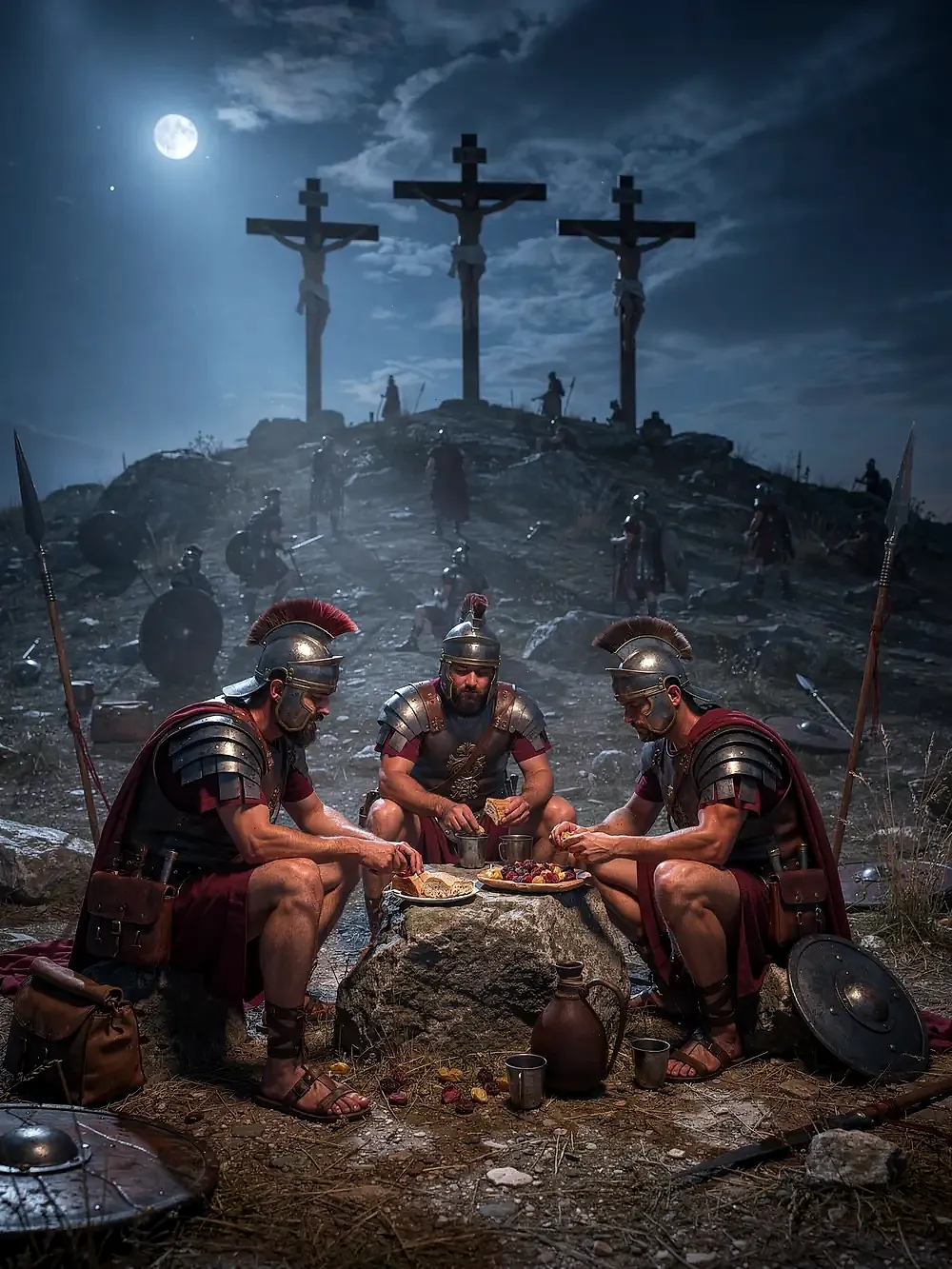
The image at the heart of the film
Four soldiers break bread and share wine beneath three crosses, unknowingly recreating the Last Supper while Christ dies above them. The sacred hidden in the mundane. The divine witnessed by the indifferent.
What if God was right in front of you… and you missed it?
Act three
They stand guard at the tomb, exhausted but dutiful.
The impossible happens. The body is gone.
Take the silver and lie about what you witnessed.
From pensions, positions, and everything you know.
“You cannot unsee what you have seen. Now choose.”
Vision & tone
Prestige historical drama that happens to be set during the most documented death in history: a psychological study of spiritual awakening, not a CGI epic.
The Passion of the Christ meets The Thin Red Line. 12 Angry Men meets No Country for Old Men.
People are hungry for stories of redemption: not cheap grace, but costly grace. If the men who killed God could be forgiven, maybe there is hope for the rest of us.
A fresh encounter with the most sacred moment in history.
An honest exploration of spiritual awakening, without manipulation.
A mirror for the eternal question: what would I have done?
Where we are
Draft 3, 107 pages. Tight, disciplined structure; character study over spectacle.
The screenplay has been submitted to film festivals. [confirm: which festivals, and may they be named here?]
Producers, director, cast, key crew, and financing partners.
Director and lead cast attachment; production financing.
Location scouting in Morocco and/or Jordan; 3–4 months of preparation.
An efficient, focused shoot built around a contained story.
For investors & backers
THE WATCH is designed as an efficient independent production with a target budget of $12–15M.
An investor deck, the full screenplay, and visual materials are available to qualified parties on request.
Request the investor deckThis website is for informational purposes only and is not an offer to sell, or a solicitation of an offer to buy, any security. Any investment opportunity would be made only through formal offering documents to qualified investors.
Join the team
Who understand that the most powerful spiritual cinema trusts its audience. Who want to make something that will be watched, discussed, and remembered. If that’s you, we’d like to talk.